UFC Distance Betting and Judges Decision Markets
 Available in US
Statistical Analysis of Fights Reaching the Scorecards
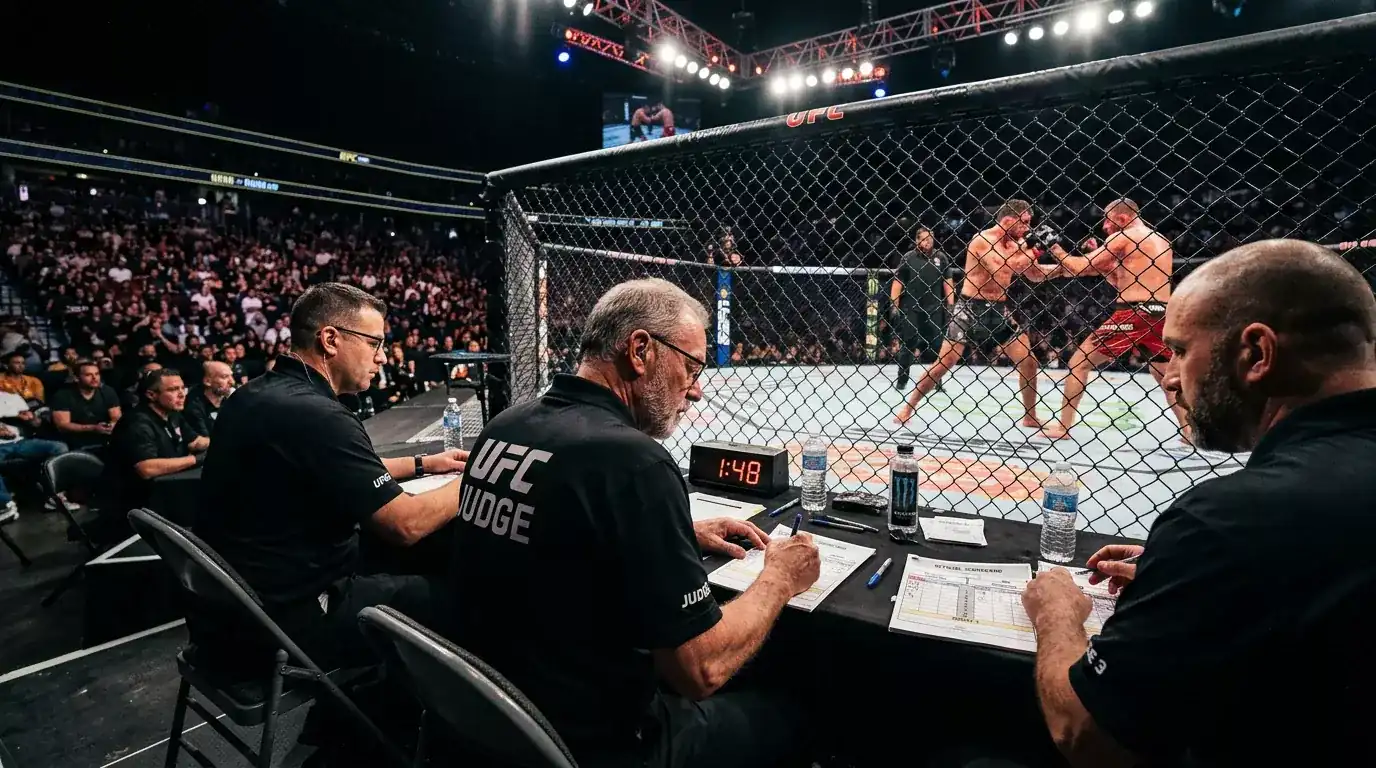
There is a perception among casual fans that every UFC fight ends with someone unconscious on the canvas. The data tells a different story. In 2025, out of 520 bouts, 253 were decided by the judges — just under half. Add in the four draws, and the proportion of fights that go the scheduled distance is even higher. The octagon produces far more scorecards than knockouts, and that creates a betting market most people overlook.
Distance and decision bets sit in a quiet corner of the UFC betting menu, but they reward a particular kind of analysis. If you can identify the matchups where neither fighter carries the power or grappling threat to force a stoppage, you are betting on an outcome that happens nearly half the time — and you are often getting plus-money odds for it because the public gravitates toward finishes.
This market pairs naturally with over/under rounds betting, but it works differently in ways that matter. Let me walk through the distinction.
How “Goes the Distance” and “Decision” Markets Differ
These two markets sound identical. They are not. A “goes the distance” bet asks whether the fight will last the full number of scheduled rounds — three or five depending on the bout. It does not care who wins or how the judges score it. If the final bell rings, your bet wins regardless of whether the decision is unanimous, split, or majority.
A “decision” bet, by contrast, asks you to pick both the fact that the fight goes the distance and who wins on the scorecards. Fighter A by decision and Fighter B by decision are separate selections with separate odds. This is a narrower bet and carries higher odds because you are predicting two things at once: that the fight reaches the judges and that the judges favour a specific fighter.
The practical difference matters when you are sizing your stake. A “goes the distance” bet at -110 is essentially a coin-flip price in many matchups, and you only need to be right about the fight lasting. A “decision” bet at +200 requires you to be right about both duration and winner — a higher payout for a meaningfully harder prediction. I tend to use “goes the distance” bets when I am confident the fight will not be finished but less sure about who the judges will favour, and “decision” bets when I have a strong read on both the pace and the likely winner.
Which Divisions Go the Distance Most Often
Division matters enormously for this market. The lighter the weight class, the more often fights reach the judges. At flyweight, 53% of bouts end by decision — the highest rate in the UFC. Move up to lightweight and the figure is around 48%. These divisions feature fighters with less one-punch knockout power, higher cardio capacity, and technical striking that favours volume over devastation. If you are looking for distance bets, this is where the frequency sits in your favour.
The pattern reverses at the top of the scale. At heavyweight, nearly two-thirds of fights end early, and only 28.6% reach the scorecards — the lowest rate of any division. Light heavyweight follows a similar pattern, with over 60% of bouts finishing before the final bell. Betting “goes the distance” at plus-money in a heavyweight fight can look tempting, but the base rate is working against you. It is not impossible, but you need a very specific matchup — typically two fighters with elite chins and conservative styles — to justify the risk.
Women’s divisions have their own dynamics. Women’s bantamweight is striking: 27 of 28 bouts since 2020 have gone past 1.5 rounds, and a large proportion reach the scorecards. The division has historically been thin in terms of finishers, and the result is a reliable distance-heavy environment. If you are building a portfolio of distance bets across a card, women’s bantamweight bouts deserve attention as near-automatic distance candidates.
Fighter Traits That Predict a Points Finish
Beyond division averages, individual fighter profiles tell you a lot about distance probability. Fighters with high significant strike accuracy but low power — measured indirectly through their finish rate and knockdown frequency — are classic distance candidates. They win rounds on volume without carrying the stopping power to end things early.
Defensive wrestling is another indicator. If both fighters have takedown defence rates above 75%, the fight is likely to stay on the feet. Standing fights between technical strikers who prioritise not getting hit tend to produce fewer dramatic moments and more rounds completed. Look for matchups where both fighters prefer to counter rather than lead — these bouts often settle into a rhythm that carries through to the scorecards.
Age can play a role too. Older fighters — 35 and above — tend to fight more conservatively, manage their energy differently, and avoid the kind of wild exchanges that lead to early finishes. When two experienced veterans meet, the probability of a distance outcome increases because both fighters know how to survive difficult moments and neither is likely to take unnecessary risks.
Cardio history is worth tracking as well. A fighter who has been taken into deep water and maintained output in round three or round five is demonstrating the stamina to survive a full fight. If both fighters have demonstrated strong late-round cardio, neither is likely to wilt under pressure in a way that creates a finish. Check the elapsed time of their recent bouts — if their last three fights have all gone past the midpoint, that pattern tends to repeat.
One more factor I watch closely: late replacements. A fighter who accepts a bout on short notice is less likely to have a specific game plan to finish the fight. They are typically in survival and adaptation mode, which tends to produce more cautious performances and, consequently, more decisions. When both fighters are on short notice — rare but it happens — the distance probability spikes.
Combining these traits into a checklist gives you a simple framework. Lighter weight class, high defensive stats on both sides, low finish rates, veteran ages, counter-striking styles — the more of these boxes you tick, the stronger the case for a distance bet. I rarely place one unless at least three factors align, because any single indicator can be overridden by one moment of chaos in the octagon.
Is a goes the distance bet the same as betting on a decision?
No. A goes the distance bet wins if the fight lasts all scheduled rounds regardless of who wins on the scorecards. A decision bet requires you to pick both that the fight goes the distance and the specific winner. Goes the distance is a broader bet with lower odds; decision is narrower with higher odds.
Do split decisions and unanimous decisions count equally for distance bets?
Yes. Both goes the distance and decision bets are settled the same way regardless of whether the judges’ verdict is unanimous, split, or majority. As long as the fight reaches the final bell and a winner is declared on the scorecards, the bet counts.
Created by the ”how to bet on the ufc Fight” editorial team.