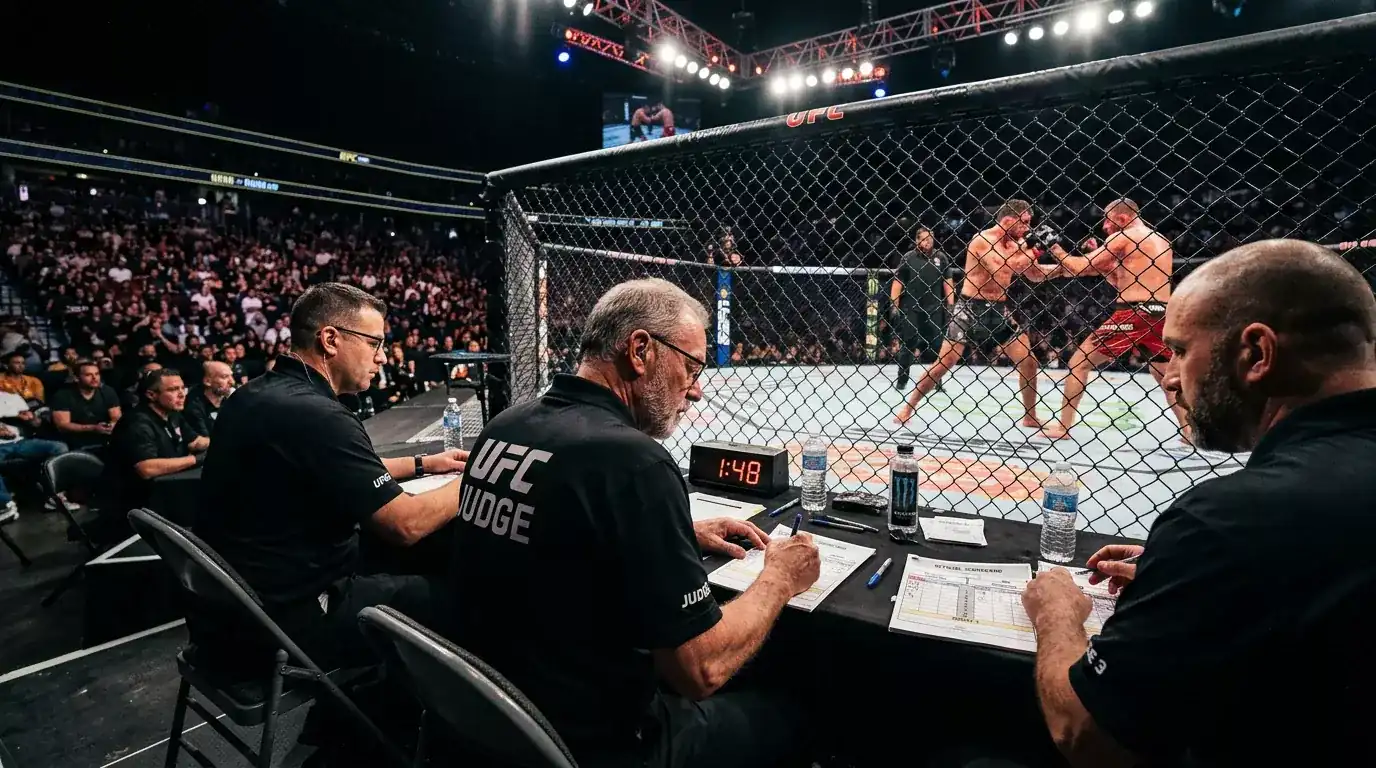
Data-Driven UFC Betting Strategy and Staking Plans
 Available in US
Table of Contents
- Implementing Data-Backed UFC Wagering Systems
- The Favourite-Underdog Dynamic in UFC
- Building a Matchup Analysis Framework
- Using Finish Rate Patterns in Your Strategy
- Line Shopping and Timing Your Bets
- Staking Plans: Flat, Percentage, and Kelly Criterion
- Strategic Errors That Drain Your Bankroll
- Systems Beat Instincts Over a Hundred Fights

Implementing Data-Backed UFC Wagering Systems
I spent my first two years betting on UFC fights following the kind of advice you find in every generic guide: back the favourite, avoid parlays, do your research. It’s not wrong, exactly. It’s just useless. Telling someone to “do their research” is like telling a pilot to “fly carefully” — the instruction carries zero actionable content.
The betting guides I analysed while building this site almost universally suffer from the same problem. They describe what bets are. They don’t explain how to find an edge. And without an edge, you’re donating money to the bookmaker in slow motion. In 2025, bookmaker favourites won 342 of 506 UFC bouts with a clear favourite. That 68% hit rate sounds profitable until you calculate the returns at the odds offered — the short prices on those favourites mean the 32% of losses frequently wipe out the cumulative gains from the wins.
What follows isn’t a collection of tips. It’s a framework — a system of analysis that I’ve refined over eight years of betting on combat sports. Every claim is backed by data. Every recommendation comes with a rationale you can verify. The goal isn’t to tell you which fighter to back on Saturday. It’s to give you a repeatable process that produces better decisions over hundreds of fights, which is the only timeframe that matters in this game.
The Favourite-Underdog Dynamic in UFC
MMA is one of the most upset-prone sports on the planet. Underdogs win approximately 35% of UFC fights — the third-highest upset rate among major betting sports. To put that in context: in Premier League football, home favourites win at rates well above 60%. In UFC, one in three fights produces a result the market didn’t expect. That volatility is a bettor’s best friend, if you know how to navigate it.
In 2024, something even more dramatic happened. Underdogs priced at +200 or longer (3.00 decimal and above) won 39% of their fights, a significant jump from the historical average of 28%. Whether that was a statistical anomaly or a genuine shift in competitive parity doesn’t change the practical implication: the market was systematically underpricing underdogs in a meaningful number of fights.
Meanwhile, favourites in 2024 won 72% of their bouts overall. That number sounds dominant, but it obscures the crucial detail: at what price? A fighter priced at decimal 1.30 (implied probability 77%) who wins 72% of the time is destroying your bankroll. You’re paying for a 77% chance and receiving a 72% one. The 5% gap between the implied and actual probability is where the bookmaker extracts their profit, fight after fight, card after card. A successful long-term approach requires discipline and a deep understanding of how to find value in MMA odds across different sportsbooks.
Where the Value Actually Lives
The profitable zone isn’t blindly backing underdogs or blindly fading favourites. It’s identifying fights where the market has mispriced the gap. A fighter the bookmaker rates as a 60% chance who you believe is a 70% chance is a value bet on the favourite. A fighter the bookmaker rates as a 25% chance who you believe is a 35% chance is a value bet on the underdog. The direction doesn’t matter — only the discrepancy between your assessment and the market’s price.
I’ve found the richest seam of mispricing in fights featuring a popular name against a less recognised but technically sound opponent. The public loads money onto the name they know, shortening the favourite’s odds beyond what the on-paper analysis supports. The underdog’s price drifts longer, creating value that wouldn’t exist in a fight between two equally well-known fighters. This pattern repeats on almost every major card, and it’s the single most reliable source of edge I’ve discovered in eight years of doing this.
Building a Matchup Analysis Framework
Picking winners without a framework is pattern recognition dressed up as analysis. You remember that Fighter A knocked out their last opponent, so you assume they’ll knock out the next one. That’s recency bias, not strategy. A framework forces you to ask the same set of questions before every fight, which prevents the emotional shortcuts that cost bettors money.
My pre-fight analysis follows five stages. First, style matchup: is this striker versus striker, grappler versus grappler, or a clash of styles? The answer determines where the fight is most likely to take place — on the feet, against the fence, or on the ground. Second, statistical profile: I pull striking output (significant strikes landed per minute), striking defence (percentage absorbed versus thrown), takedown accuracy, and takedown defence for both fighters. Third, physical context: reach advantage, height differential, age, and recent activity level. Fourth, situational factors: is either fighter coming off a long layoff, a camp change, a weight class move, or a loss? Fifth, and this is the one most bettors skip entirely, I assess the quality of opposition each fighter has faced. A 90% takedown defence rate earned against low-level grapplers means something entirely different than the same number earned against elite wrestlers.
Roughly half of all UFC fights in 2025 ended in the heavyweight division by KO or TKO, while lighter weight classes produced far more decisions. That structural reality should directly shape which market you select, not just which fighter you back. A framework that ignores weight class dynamics is incomplete.
The Opponent-Quality Filter
Numbers without context are dangerous. A fighter with 8.5 significant strikes landed per minute looks like a wrecking ball on paper. But if those numbers were compiled against opponents with combined records of 45-60, the output is inflated by weak competition. I cross-reference every statistical claim against the opponent’s ranking and historical performance. It adds fifteen minutes to my analysis per fight. It’s also prevented me from backing half a dozen statistical illusions who looked unstoppable right up until they met genuine competition.
Rematch data reinforces this point. Winners of first fights go on to win the rematch 66% of the time — a 52-26 record across UFC history. That’s useful information, but it becomes more useful when you ask why the first fight went the way it did. If Fighter A won a close decision in the first meeting and Fighter B has since changed camps, added new tools, and moved up in weight, the 66% baseline shifts. Context doesn’t override data. It sharpens it.
Using Finish Rate Patterns in Your Strategy
One of the most actionable datasets in UFC betting is the breakdown of fight outcomes by type. In 2025 across all 520 fights: 65 knockouts, 103 technical knockouts, 92 submissions, 253 decisions, 4 draws, and 3 no contests. Those numbers aren’t just trivia — they’re a strategic compass.
Roughly half of all UFC fights end without a finish. That means the over/under rounds market and the “goes the distance” market are live options on every single card, not exotic sidebets reserved for special occasions. If you’re only ever betting moneyline, you’re ignoring a dataset that tells you the most likely thing to happen in any given fight is a judges’ decision.
The strategic application works like this: when both fighters in a matchup have historically gone to decision more often than not, the over-rounds market typically offers better value than picking a winner at a coinflip price. When both fighters have high finish rates, the under-rounds market or method-of-victory KO/TKO becomes attractive. When one fighter finishes opponents but the other survives deep into fights, you’re looking at a split — the method-of-victory market lets you capture the stylistic tension directly.
For a detailed breakdown of how these patterns shift across weight classes — from heavyweight’s knockout-heavy landscape to flyweight’s decision-dominant territory — our underdog betting guide explores how divisional dynamics create systematic pricing gaps that favour informed bettors.
Line Shopping and Timing Your Bets
Two years ago I placed a bet on a fighter at 2.20 with one bookmaker. Twenty minutes later, a friend showed me the same fighter at 2.50 on a different platform. That 0.30 difference — on a single bet — was a 14% improvement in potential return for bearing exactly the same risk. I’d thrown money away by not spending two minutes comparing prices, and the experience permanently changed how I operate.
Line shopping means checking the same market across multiple bookmakers and placing your bet where the odds are best. It’s the single lowest-effort, highest-impact habit in sports betting. You need accounts with at least three or four UKGC-licensed bookmakers to do it properly, and an odds comparison site (several free ones exist) to check prices quickly before each card.
Timing matters too. UFC odds typically open on Monday or Tuesday of fight week and move throughout the week as money comes in. Early in the week, the lines are set by the bookmaker’s models and sharp early-bird bettors. By Thursday and Friday, public money piles in, often shortening the favourite and lengthening the underdog. If your analysis aligns with the early sharp action, bet early. If you’re backing an underdog that the public is ignoring, you can often wait until closer to fight night for the best price.
The Closing Line as a Benchmark
The closing line — the final odds at fight time — is widely considered the sharpest, most information-rich price the market produces. Professional bettors track whether they consistently beat the closing line, because doing so over a large sample is the strongest indicator of long-term profitability. If you regularly place bets at prices better than where the line closes, you’re demonstrably ahead of the market. If you consistently take worse prices, the market is smarter than your analysis, regardless of your win rate.
I keep a simple spreadsheet for every bet: the odds I took, the closing odds, and the result. After 100 bets, the pattern becomes unmistakable. Either I’m consistently capturing better prices than the close — which means my timing and analysis are working — or I’m not, which means something in my process needs to change. The MMA market’s 35% underdog win rate creates enough volatility that short-term results are almost meaningless. Only closing line value, tracked over hundreds of bets, tells you whether your approach genuinely works.
Staking Plans: Flat, Percentage, and Kelly Criterion
You can have the best fight analysis in the country and still lose money with poor staking. How much you bet on each selection matters as much as which selections you make. The UK’s online gambling sector generated GGY of 7.8 billion pounds in the year to March 2025 — a significant chunk of that came from bettors who picked winners but sized their bets badly.
Flat Staking
The simplest approach: bet the same amount on every selection, regardless of confidence level. If your unit is ten pounds, every bet is ten pounds. The advantage is discipline — it removes the temptation to oversize a “sure thing” that turns out to be anything but. The disadvantage is that it doesn’t differentiate between a high-confidence play where you’ve identified genuine value and a marginal selection where the edge is thin. I recommend flat staking for any bettor in their first year. The habit of consistent sizing teaches emotional control faster than any other method.
Percentage Staking
Instead of a fixed pound amount, you stake a fixed percentage of your current bankroll — typically 1-3% per bet. As your bankroll grows, your bet sizes grow with it. As it shrinks, your bets shrink too, which provides a natural brake against ruin. A bettor with a 500 pound bankroll staking 2% risks ten pounds per bet. After a good month that grows the bankroll to 650, the stake rises to thirteen pounds. After a bad stretch that drops it to 400, the stake falls to eight. The system self-corrects.
Kelly Criterion
The Kelly formula calculates the optimal stake based on your estimated edge and the odds offered. The formula is: (Probability x Decimal Odds – 1) / (Decimal Odds – 1). If you estimate a fighter has a 55% chance of winning at decimal odds of 2.10, Kelly suggests staking 5.5% of your bankroll. The theoretical elegance is that Kelly maximises long-term growth. The practical problem is that it requires accurate probability estimates, which most bettors — including experienced ones — struggle to produce consistently. Overestimate your edge by a few percentage points and Kelly tells you to stake far too much. I use a fractional Kelly approach, staking half or a quarter of the calculated amount, which preserves the directional logic while building in a margin for error.
Strategic Errors That Drain Your Bankroll
The costliest mistake I see in UFC betting isn’t backing the wrong fighter. It’s backing the right fighter at the wrong price and not recognising the difference. A fighter who wins 60% of the time is a losing bet at odds that imply a 65% probability. The pick was right. The bet was wrong. That distinction is the entire game.
Favourites in the -400 to -900 odds range win between 88% and 93% of the time historically. That level of reliability creates a psychological trap: the wins feel inevitable, so the bettor sizes up, thinking the risk is minimal. But the one loss in eight or twelve wipes out every penny accumulated from the previous string of wins because the payouts on heavy favourites are so thin. I’ve watched bettors compound this by doubling down on the next heavy favourite to “recover,” which simply reloads the same trap with higher stakes.
The second most damaging error is ignoring the market you select. Bettors who default to moneyline on every fight are leaving edge on the table in at least half the bouts on any given card. A fight that screams “under 1.5 rounds” based on both fighters’ finishing tendencies might offer 5/2 on the under but only 1/5 on the favourite moneyline. The moneyline bettor risks five pounds to win one. The under-rounds bettor risks the same five pounds to win 12.50. Both need the same fighter to win, but the under-rounds bettor has captured the specific insight their analysis produced.
Third: emotional betting after a bad card. UFC runs events nearly every weekend. A losing Saturday night creates the urge to “make it back” seven days later by increasing stakes or taking marginal bets you’d normally skip. This is tilt, and it is the single fastest way to destroy a carefully managed bankroll. The antidote is a rule, enforced in advance: after any losing card, your next card’s stakes drop by one tier, not rise. The discipline to shrink when everything in your brain screams to grow is what separates recreational bettors from the ones who survive long enough to profit.
Systems Beat Instincts Over a Hundred Fights
Every bettor has a gut feeling about every fight. The ones who last are the ones who don’t bet their gut. They bet their system. A framework that asks the same questions, applies the same staking rules, and measures the same metrics over hundreds of fights will outperform instinct every single time. Not because the system is always right — it isn’t — but because it removes the inconsistencies, emotional reactions, and cognitive biases that make human judgement unreliable at scale.
Build your system around three pillars: matchup analysis that accounts for style, statistics, and context; a staking plan that protects your bankroll from variance; and a tracking process that lets you identify what’s working and what isn’t. Then give it time. UFC runs enough cards per year that 200-plus bets is achievable. At that sample size, the signal starts separating from the noise, and you’ll know whether your approach genuinely holds an edge or whether you’ve been riding a lucky streak that probability will eventually correct. Discover expert breakdowns and exclusive tips at MMA Betting Tips UK to maximize your weekend returns.
Is it better to bet on UFC favourites or underdogs?
Neither, as a blanket strategy. Favourites win about 68-72% of UFC fights but often at odds too short to produce profit. Underdogs win roughly 35% of the time, the third-highest upset rate in major sports. The profitable approach is identifying specific fights where the market has mispriced one side, regardless of whether that side is the favourite or underdog.
What is the best bankroll strategy for UFC betting?
Start with flat staking — the same amount on every bet, typically 1-3% of your total bankroll. This builds discipline and prevents emotional oversizing. Once you can accurately estimate your edge on individual fights, transition to percentage staking or fractional Kelly. The key is consistency: no single bet should ever risk enough to materially damage your bankroll.
How much does fighter style matter for UFC betting strategy?
Fighter style is the single most important variable in matchup analysis. A wrestler facing a pure striker creates entirely different dynamics than two wrestlers meeting or two strikers clashing. Style matchups determine where the fight takes place, which statistical advantages come into play, and which betting markets best capture the likely outcome.
Does the fight location influence UFC betting outcomes?
Location can matter in specific cases. Fighters competing in their home country or city sometimes receive crowd energy that influences pace and aggression, particularly in close fights that go to the judges. Altitude affects cardio in locations like Mexico City. Travel and jet lag can impact fighters crossing multiple time zones. These factors rarely override skill and preparation but can be tiebreakers in closely matched fights.
Prepared by the how to bet on the ufc Fight editorial staff.