UFC Method of Victory Betting Markets
 Available in US
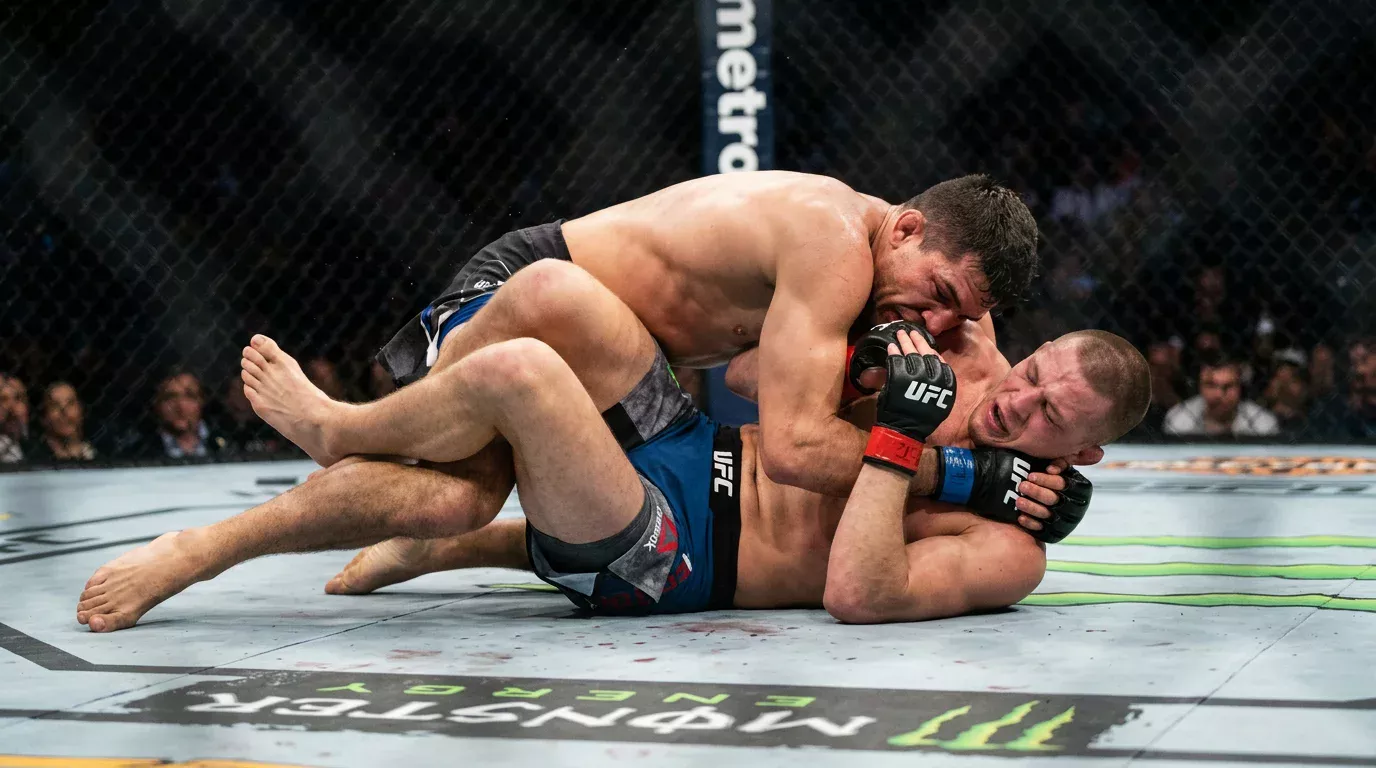
Structuring Wagers Around Method of Victory Markets
The moment I stopped betting exclusively on who wins and started betting on how they win, my returns changed. Not overnight, not dramatically — but consistently, month after month. Method of victory is one of the most underused markets in UFC betting, and it is where analytical bettors separate themselves from the crowd.
The logic is simple. In 2025, those 520 UFC fights produced 65 KOs, 103 TKOs, 92 submissions, and 253 decisions. Each of those outcomes represents a different market with different odds, and the bookmaker has to price all of them correctly. When you bet a moneyline, you are competing against a single, heavily scrutinised number. When you bet a method of victory, you are competing against a more complex set of probabilities where inefficiencies are easier to find.
This market asks you to combine two analyses: who wins the fight, and what does the finish look like? That second question requires a deeper understanding of fighting styles, physical attributes, and divisional trends. It rewards the bettor who watches tape, studies grappling exchanges, and understands why certain matchups produce certain outcomes. MMA’s roughly 35% underdog win rate is already the third highest among major betting sports — and when you layer in method of victory, the variance gets even more interesting.
KO and TKO: What Counts as Each and How Odds Reflect It
I have seen bettors lose money because they did not understand the difference between a KO and a TKO on the settlement sheet. It is worth being precise. A knockout means the fighter is rendered unconscious or unable to continue by a single strike or combination — they are out before the referee steps in. A technical knockout means the referee, doctor, or corner stops the fight because a fighter is taking too much damage but has not been knocked unconscious. The distinction matters because some bookmakers separate KO and TKO into different market options, while others combine them as “KO/TKO”.
Heavyweight is the division where KO/TKO betting comes alive. Around half of all heavyweight bouts end by knockout or technical knockout, and only about 28.6% reach the judges’ scorecards — the lowest decision rate in the UFC. If you are pricing a heavyweight fight between two power punchers, the combined KO/TKO outcome is not just plausible — it is the most likely single category. The odds reflect this, so the value in heavyweight KO/TKO bets tends to come from identifying which fighter does the stopping, not whether a stoppage occurs.
At lighter weights, the picture inverts. Flyweight and bantamweight bouts are far more likely to go to the scorecards, which means a KO/TKO bet in those divisions carries longer odds and higher risk. But it also means that when a genuine knockout artist enters a lighter division — a fighter with exceptional power relative to the weight class — the method of victory market can misprice the KO/TKO outcome because the division’s base rate drags the probability estimate down. That is where sharp bettors look.
Submission Wins: Reading the Grappling Matchup
Submissions accounted for 92 of the 520 fights in 2025 — roughly 18% of all outcomes. That makes submission the least common finish type, and it also makes it the most volatile in terms of odds. Bookmakers know that casual bettors gravitate toward KO/TKO because knockouts are dramatic and visible. Submission outcomes require a deeper understanding of grappling, which means the market is thinner and the prices can be less efficient.
When I assess a submission bet, I look at three things in order. First, does the winning candidate have an active submission game? Not just a black belt in Brazilian jiu-jitsu — plenty of BJJ black belts in the UFC rarely attempt submissions because their game plan focuses on ground-and-pound control. I want to see actual submission attempts in recent fights, ideally against opponents of similar or higher calibre.
Second, does the opponent have a history of being submitted? A fighter who has been tapped out multiple times in their career is telling you something about their defensive grappling. That weakness does not disappear between fight camps. If they are facing a high-level submission artist, the probability of another submission loss is meaningfully higher than the base rate.
Third, what is the path to the ground? A submission requires the fight to go to the mat, which means someone has to secure a takedown or pull guard. If both fighters are pure strikers with no wrestling pedigree, the submission probability drops regardless of what their jiu-jitsu credentials say on paper. The grappling matchup is not just about who is better on the ground — it is about whether the fight ever gets there.
Decision Outcomes: When Fights Go the Distance
A decision bet is a bet on attrition, on cardio, on competitive balance. It is the outcome that casual fans find boring and that analytical bettors find profitable.
The lighter the weight class, the higher the decision rate. Flyweight fights go to the judges more than half the time, and lightweight sits around 48%. As you move up through welterweight and middleweight, the finish rate climbs and the decision percentage drops. By the time you reach heavyweight, barely more than a quarter of fights see the scorecards. This gradient is one of the most reliable structural patterns in UFC betting, and it should inform every method of victory bet you place.
Decision bets work best when two conditions are present: both fighters have strong chins and defensive grappling, and neither possesses fight-ending power relative to their division. A matchup between two point-fighters in the lightweight division who have each gone to decision in four of their last five bouts is a textbook decision bet. The odds on “by decision” in that scenario might sit around even money, but your assessment of the probability — based on the fighters’ actual finishing rates — might be closer to 60% or 65%. That gap is value.
Watch for one trap: late replacement fights. When a fighter takes a bout on short notice, they are less conditioned, less game-planned, and more likely to fade in later rounds. That fatigue creates finish opportunities that would not exist in a full-camp scenario. The division-level finish rate data gives you the baseline, but short-notice changes require an adjustment to your probability estimate.
Combined Method Markets: KO/TKO or Submission vs Decision
Some bookmakers offer simplified method markets that group outcomes: “inside the distance” versus “by decision”, or “KO/TKO or Submission” versus “Decision”. These combined markets are less granular but can offer better value for bettors who have a strong view on whether a fight finishes early or goes the distance, without wanting to specify exactly how.
I use combined markets most often on cards where I have analysed the matchup and concluded that the fight is either clearly heading for a finish or clearly heading for the scorecards, but I cannot pinpoint whether the finish comes via strikes or grappling. In a heavyweight bout between a wrestler with heavy hands and a striker with questionable takedown defence, the fight could end by KO/TKO or by ground-and-pound TKO or by submission — all plausible. Betting “inside the distance” captures all of those outcomes in a single wager.
The pricing on combined markets is tighter than on individual methods because the bookmaker is combining probabilities, but the reduced complexity means you need to be right about fewer variables. For newer bettors especially, combined method markets are an excellent stepping stone between the moneyline and the full granularity of round-by-round method bets.
What is the difference between KO and TKO in UFC betting?
A KO occurs when a fighter is knocked unconscious or rendered unable to continue by strikes. A TKO occurs when the referee, doctor, or fighter’s corner stops the bout because of accumulated damage, even though the fighter is still technically conscious. For betting purposes, some bookmakers combine them as a single KO/TKO outcome, while others separate them into distinct markets. Always check the specific settlement rules at your sportsbook before placing a method of victory bet.
Does a doctor stoppage count as a TKO for betting purposes?
Yes. A doctor stoppage is classified as a TKO in official UFC records and is settled as such by bookmakers. If a doctor determines a fighter cannot continue due to a cut, swelling, or injury, the bout ends as a TKO victory for the opponent. This applies to method of victory bets, so a bet on KO/TKO would win in a doctor stoppage scenario.
Created by the ”how to bet on the ufc Fight” editorial team.