Complete UFC Betting Glossary and Terminology
 Available in US

Core MMA Wagering Terminology and Definitions
UFC betting sits at the intersection of two specialist vocabularies: combat sports and wagering. If you have come from football betting, you know what an accumulator is but might not know what a rear-naked choke means. If you are an MMA fan first, you understand southpaw stance and cage control but might draw a blank on implied probability or overround. Either way, fluency in both sets of terms is the baseline for making informed bets.
In 2025 the UFC staged 42 events with 520 bouts across 26 cities and five continents. The scale means the terminology comes up constantly — in pre-fight analysis, in the betting markets themselves, and in the post-fight breakdowns that shape the odds for the next card. This glossary covers the terms you will encounter most often, grouped alphabetically, with definitions written for a UK audience using UK conventions. For a deeper look at how these terms translate into actual betting markets, the UFC bet types guide walks through each market in detail.
A–F: Accumulator to Fractional Odds
Accumulator (Acca): A single bet combining multiple selections. All legs must win for the bet to pay out. In American terminology, this is called a parlay. The combined odds multiply with each leg, producing higher potential payouts and proportionally higher risk.
American Odds: An odds format using plus and minus signs. A minus number (e.g. -200) indicates the favourite and how much you must stake to win 100 units. A plus number (e.g. +150) indicates the underdog and how much profit a 100-unit stake would return.
Bout: A single fight between two competitors. A UFC event typically features 10 to 14 bouts on the full card.
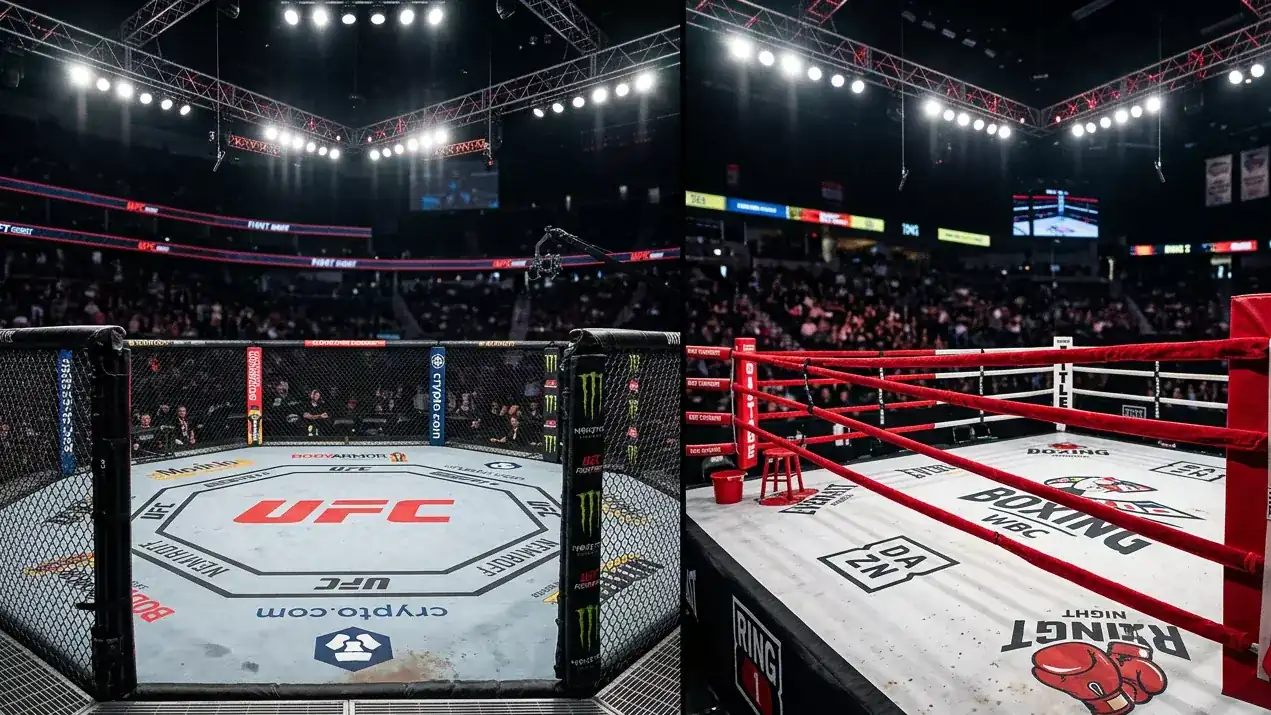
Cage: The octagonal enclosed area where UFC fights take place. Officially called the Octagon and trademarked by the UFC.
Chalk: Slang for the favourite. “Backing the chalk” means betting on the fighter with shorter odds. In 2025, chalk won 342 of 506 UFC bouts where a clear favourite was identified.
Co-main Event: The second-to-last fight on the main card. Typically features high-profile fighters or title contenders.
Dead Heat: A draw or tie. Rare in UFC but possible. Most moneyline bets are voided in the event of a draw.
Decision: A fight outcome determined by the judges’ scorecards after all scheduled rounds have been completed. Can be unanimous (all three judges agree), split (two-to-one), or majority (two judges score for one fighter, one scores a draw).
Dog: Slang for underdog — the fighter with longer odds, expected to lose.
Each Way: Not commonly offered in UFC betting. In combat sports, most markets are win-only.
Favourite: The fighter considered more likely to win, reflected by shorter odds. In UK fractional format, a favourite might be priced at 4/7 or 1/3.
Fight Card: The full schedule of bouts at a UFC event, divided into early prelims, prelims, and the main card.
Fractional Odds: The UK-standard odds format expressed as a fraction (e.g. 5/1). The first number represents potential profit, the second represents the stake. A 5/1 bet returns five pounds profit for every one pound staked, plus your stake back.
G–O: GamStop to Overround
GamStop: The UK’s national self-exclusion scheme for online gambling. Registering with GamStop blocks access to all UKGC-licensed online gambling sites for a chosen period of six months, one year, or five years.
Gross Gambling Yield (GGY): The total amount retained by gambling operators after paying out winnings. The UK gambling industry’s GGY reached 16.8 billion pounds in the year to March 2025.
Implied Probability: The probability of an outcome as suggested by the odds. Calculated by converting odds into a percentage. For decimal odds of 2.50, the implied probability is 40% (1 divided by 2.50). Includes the bookmaker’s margin, so implied probabilities for all outcomes in a market will sum to more than 100%.
In-Play (Live Betting): Placing bets after a fight has begun. Odds update between rounds and sometimes mid-round depending on the sportsbook.
KO (Knockout): A fight ending when a fighter is rendered unconscious by a legal strike. One of the four main methods of victory alongside TKO, submission, and decision.
Line: The odds offered by a sportsbook on a particular outcome. “The line” can also refer to the point spread or total in round-based markets.
Line Movement: Changes in odds between the time a market opens and when the fight begins. Driven by betting volume, sharp money, and new information such as injury reports or weigh-in results.
Main Event: The final and headline fight of a UFC card. Main events are five rounds (25 minutes) rather than the standard three rounds (15 minutes).
Moneyline: A bet on which fighter will win the bout, regardless of method. The simplest and most popular UFC bet type.
No Contest: A fight result declared when an accidental foul ends the bout before a specified point. Most bets are voided if the result is a no contest.
Octagon: The eight-sided enclosed fighting area used exclusively by the UFC. The standard competition Octagon measures 30 feet across.
Overround (Vig/Juice): The built-in bookmaker margin on a market. If the implied probabilities for all outcomes sum to 105%, the overround is 5%. This is how the bookmaker guarantees profit regardless of the result.
P–Z: Parlay to Weight Class
Parlay: The American term for an accumulator — a multi-leg bet where all selections must win. Common in UFC betting because cards feature multiple fights on a single night.
Prelims: The earlier fights on a UFC card, broadcast before the main card. Prelim fights often receive less betting attention, which can create value opportunities.
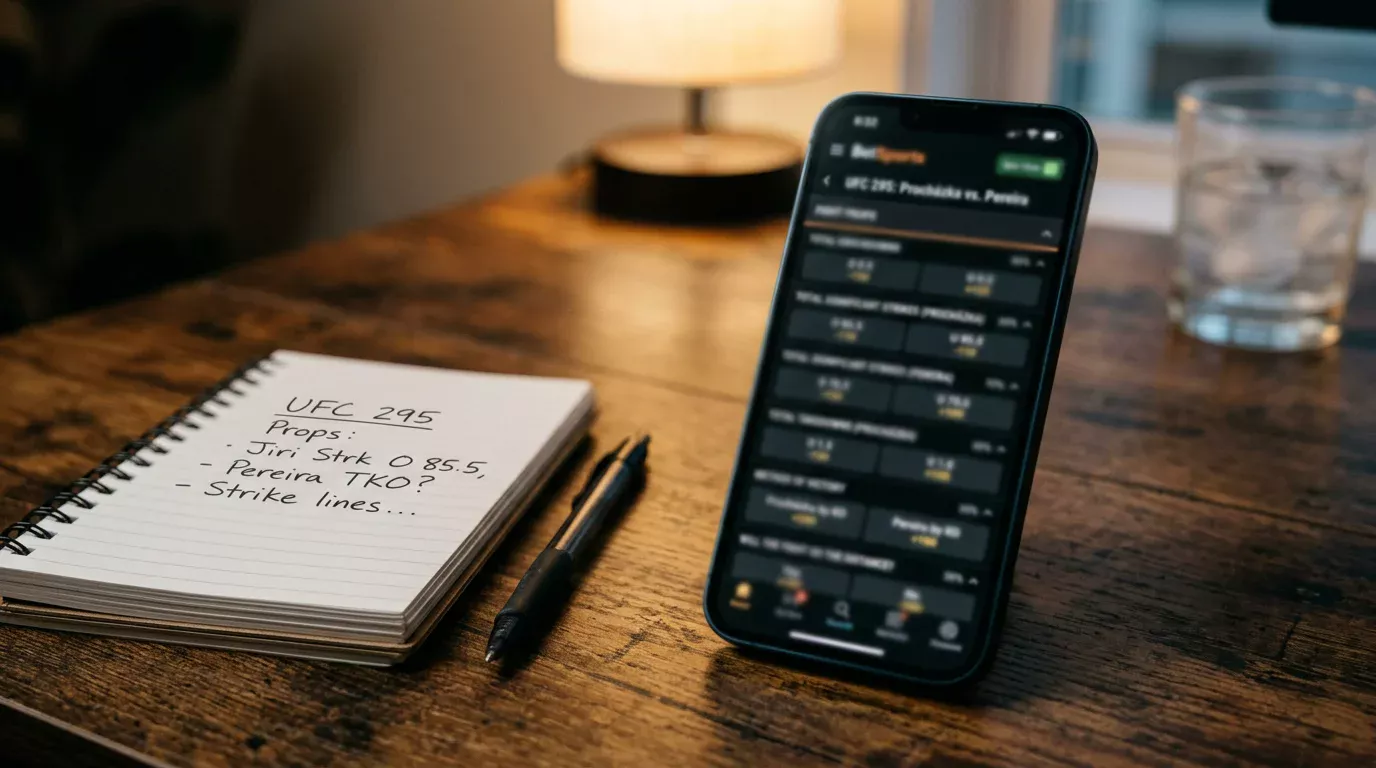
Prop Bet (Proposition Bet): A wager on a specific event within a fight rather than the overall outcome. Examples include whether there will be a knockdown, the total number of significant strikes, or which fighter will attempt the first takedown.
Punter: British slang for a bettor. Used interchangeably with “bettor” in UK gambling culture. Around 10% of UK adults bet on sports, with men at 16% compared to 4% for women.
Return: The total amount paid back to the bettor on a winning bet, including the original stake plus profit.
Sig. Str. (Significant Strikes): Strikes at distance and in the clinch that are considered meaningful by UFC statisticians. Does not include blocked or deflected strikes. A key metric for performance prop bets.
SLpM (Significant Strikes Landed per Minute): The average number of significant strikes a fighter lands per minute of cage time. Used to assess striking volume and output.
Submission: A fight ending when one fighter forces the opponent to concede (tap out) via choke, joint lock, or other technique. Counts as a stoppage for over/under rounds purposes.
TD Avg (Takedown Average): The average number of takedowns a fighter lands per fifteen minutes. A core grappling metric.
TKO (Technical Knockout): A fight ending when the referee stops the bout because a fighter cannot intelligently defend themselves, even though they have not been rendered unconscious. Includes doctor stoppages and corner stoppages.
UKGC (UK Gambling Commission): The regulatory body responsible for licensing and overseeing all commercial gambling in Great Britain. Any sportsbook offering betting to UK residents must hold a UKGC licence.
Underdog: The fighter considered less likely to win. Listed at longer odds than the favourite. UFC underdogs win roughly 35% of fights — more often than in most major sports.
Value: A bet where the implied probability set by the odds is lower than the bettor’s assessed probability of the outcome. Finding value consistently is the foundation of profitable long-term betting.
Vig: Short for vigorish — the bookmaker’s commission built into the odds. Same concept as overround and juice.
Void: A bet that is cancelled and the stake returned. UFC bets may be voided if a fight is ruled a no contest, if a fighter is replaced, or if a market is withdrawn for integrity reasons.
Weight Class (Division): The category in which a fighter competes, defined by an upper weight limit. The UFC operates twelve active divisions: eight men’s (flyweight 125 lb through heavyweight 265 lb) and four women’s (strawweight 115 lb through featherweight 145 lb).
What is the difference between a parlay and an accumulator in UFC betting?
There is no difference — they are the same bet type with different names. Parlay is the American term; accumulator is the UK and European term. Both refer to a multi-leg bet where every selection must win for the bet to pay out. The combined odds multiply across all legs.
What does chalk mean in UFC betting?
Chalk is slang for the favourite — the fighter with shorter odds who is expected to win. If someone says they are backing the chalk, they are betting on the favourite. The term originates from horse racing, where odds were once written in chalk on a board, with the favourite’s name most frequently updated.
Prepared by the how to bet on the ufc Fight editorial staff.