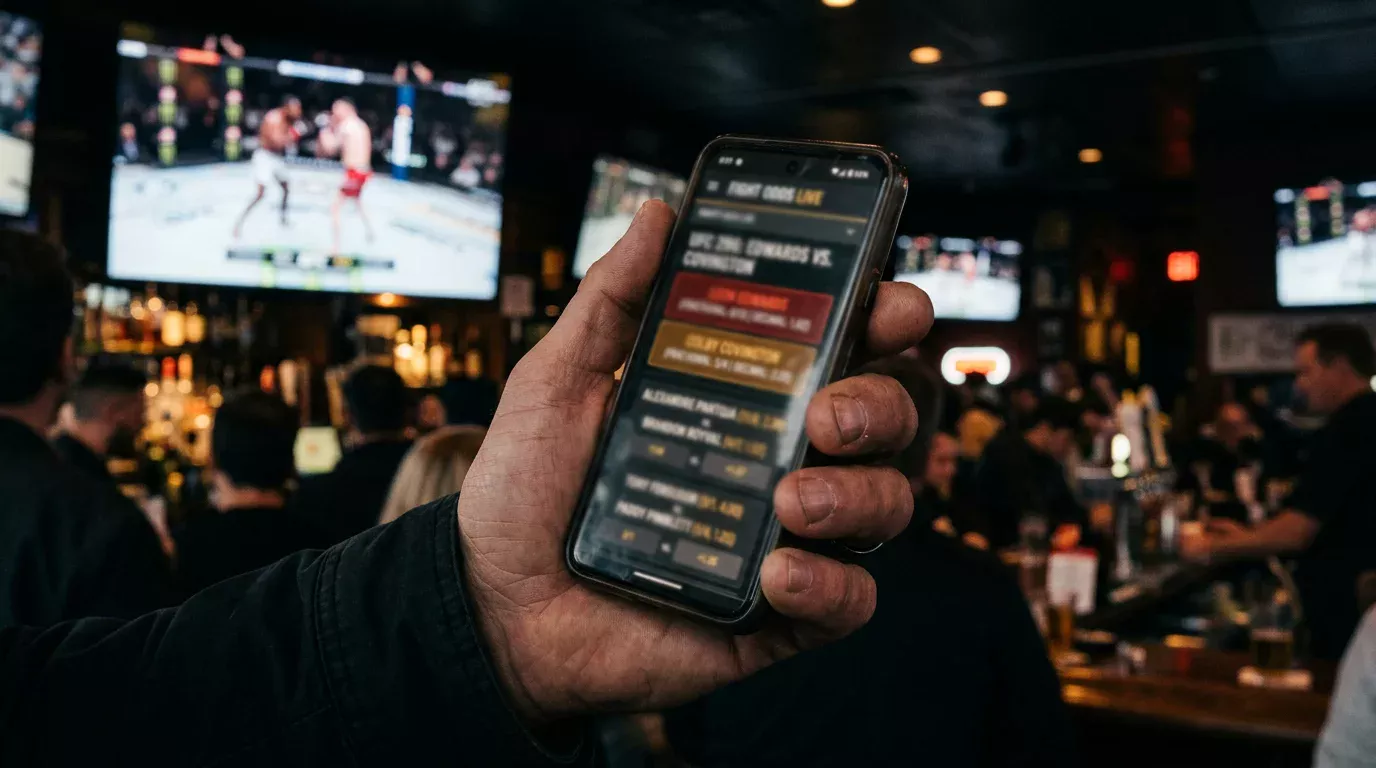
Live UFC Betting Odds and In-Play Strategies
 Available in US
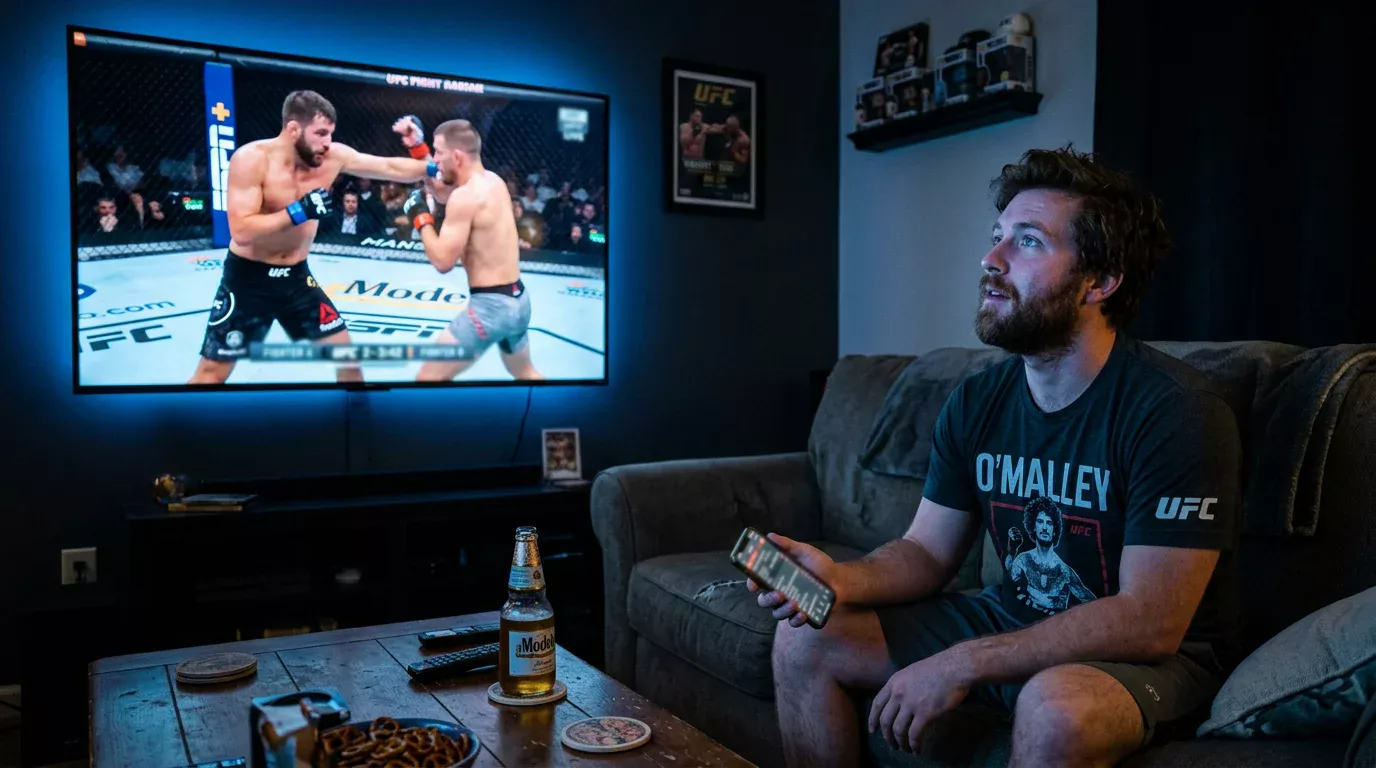
Comparing Live In-Play Odds Against Pre-Fight Lines
I placed my first live UFC bet in 2019 during a Fight Night card where the heavy favourite got dropped thirty seconds into round one. The moneyline flipped entirely, and I grabbed the favourite at plus-money before he recovered and finished the fight in the second. That single moment taught me more about in-play value than six months of pre-fight wagering.
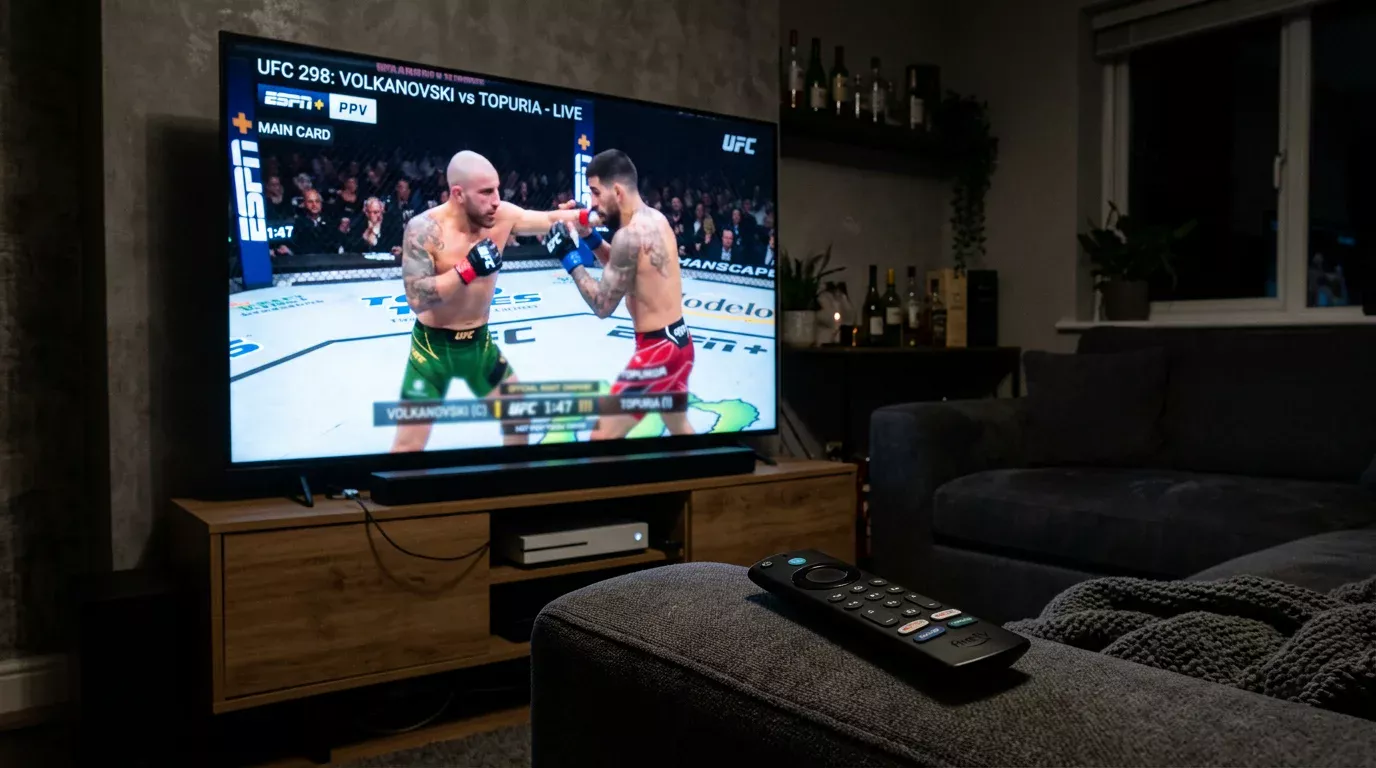
Pre-fight markets give you time to research, compare lines, and think. Live betting strips all of that away. Odds shift in real time based on what is happening inside the octagon, and the bookmaker’s algorithm reacts to strikes landed, takedowns secured, and knockdowns scored. You are no longer betting on a projection — you are betting on what you can see with your own eyes, right now.
The structural difference matters. In 2025, UFC held 42 events featuring 520 bouts, producing 65 knockouts, 103 TKOs, 92 submissions, and 253 decisions. That breakdown tells you something critical for live betting: roughly half of all fights end before the judges’ scorecards come into play. Every round that passes without a finish changes the probability landscape, and the in-play odds reflect that shift instantly. A fight that was priced at -300 before the opening bell might drift to -150 after the favourite absorbs a hard first round, or tighten to a coin flip if both fighters look evenly matched heading into round three.
The other distinction is informational. Before a fight, you are working with historical stats, camp reports, and weigh-in footage. During a fight, you are watching the actual contest unfold. A fighter’s cardio, chin, and willingness to engage are no longer hypothetical — they are visible. That real-time data is your edge, but only if you know what to look for and when to act.
The Three Timing Windows: Pre-Round, Mid-Round, and Between Rounds
Most punters treat live betting as a single continuous activity. It is not. There are three distinct windows during a UFC fight, each with its own risk profile and opportunity set, and confusing them is a fast way to burn through your bankroll.
The first window opens in the seconds before a round begins. Bookmakers briefly reopen markets with adjusted odds based on what happened in the previous round. This is the cleanest window for live betting because you have had a full sixty-second break to process what you saw, the fighters’ corners have revealed tactical adjustments through audible instructions, and the odds have settled to reflect the round-by-round scoring. I find the best value here when a fighter clearly lost a round on the scorecards but showed physical signs of being the fresher competitor — better footwork, less heavy breathing, fewer marks on the face.
The second window is mid-round, and it is the most dangerous. Odds swing violently during exchanges. A knockdown can shift a line by hundreds of points in seconds. The temptation to react is enormous, but the bookmaker’s algorithm is faster than you are. By the time you process what happened, add a selection to your bet slip, and confirm, the line has already moved past the value point. Mid-round betting works only when you have a pre-formed thesis — for example, you expected a grappler to shoot for takedowns in the second round, and you see him setting up his wrestling early. You are not reacting; you are confirming a prediction.
The third window sits between rounds, during the sixty-second rest period. This is where the fight’s narrative crystallises. Almost two thirds of bouts in the heavier divisions end before the final bell, while lighter weight classes trend toward decisions — flyweight fights go to the judges about 53% of the time. If you are watching a lightweight bout that has reached round three with both fighters looking fresh, the probability of a decision finish has increased substantially from the pre-fight line. The between-rounds window lets you bet on outcomes like “goes the distance” or over/under totals with much better information than you had at the start.
Reading the Fight in Real Time: Body Language, Cardio, and Damage
A friend of mine once asked what I actually watch during a live fight that other bettors miss. The honest answer is not strikes or takedowns — the stats feed handles those. What I watch is everything the camera shows that the algorithm cannot quantify.
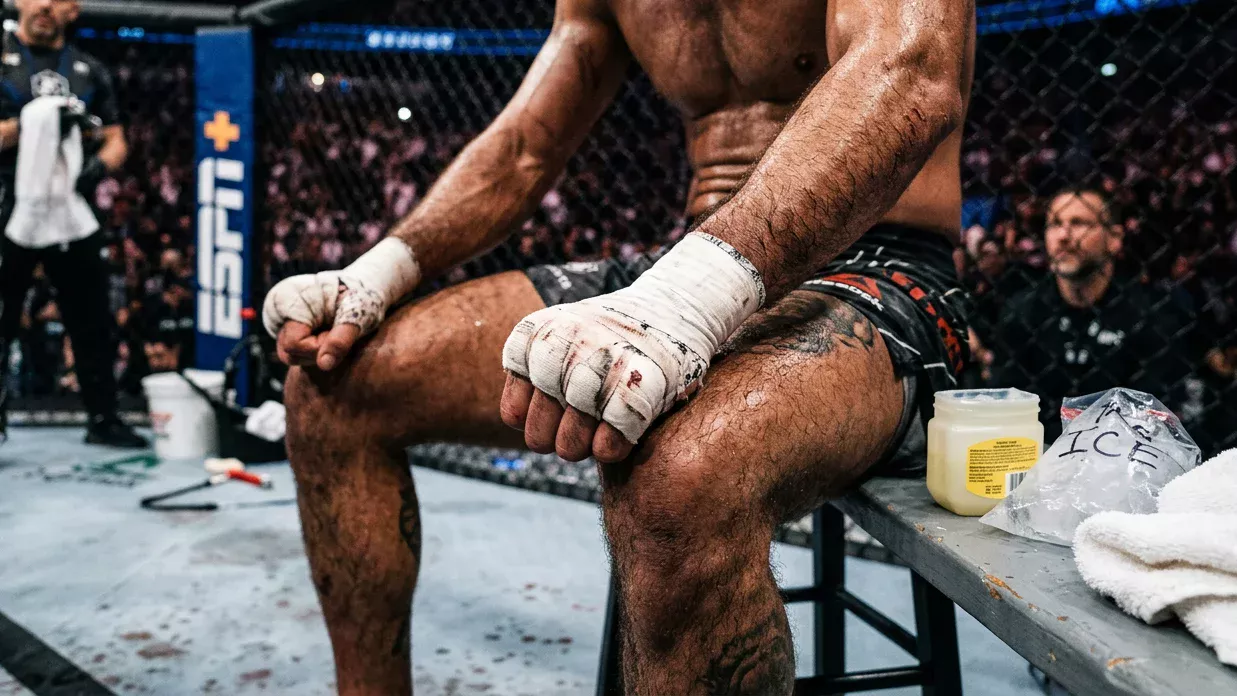
Breathing patterns are the single most reliable real-time indicator. A fighter whose mouth is closed and whose chest rises steadily between exchanges has gas in the tank. A fighter breathing through an open mouth with exaggerated shoulder movement is fading, regardless of what the scorecards say. Cardio decline compounds: a tired fighter throws fewer strikes, absorbs more damage, and becomes vulnerable to finishes. If the favourite is visibly gassing in round two of a three-round fight, the live odds have not fully priced in how much worse round three will be.
Footwork tells a parallel story. A fighter who started the bout circling and cutting angles but is now flatfooted and backing straight to the fence has lost confidence in his legs. This often precedes a takedown attempt he would not have needed if his striking was working, or worse, a stoppage from accumulated damage he can no longer avoid.
Damage is trickier. A cut above the eye looks dramatic on screen but rarely affects the fight unless it obstructs vision. A body shot that makes a fighter visibly wince and lower his lead hand is far more significant for betting purposes. Body work accumulates silently — the commentators might not mention it, but a fighter who has absorbed fifteen hard shots to the liver in two rounds is a different competitor in the third. Watch for the subtle guard drop, the slight lean to one side, the shortened punch combinations. These are the tells that the in-play algorithm does not capture because they are qualitative, not quantitative.
Corner audio, when audible on the broadcast, offers another layer. A corner screaming “you need this round” is telling you their fighter is behind on the scorecards. A corner calmly saying “same thing, keep going” is confirming a game plan that is working. Neither of these is priced into the odds explicitly. Watching the early exchanges closely can give you a massive advantage if you plan to wager on exact round finishes during the fight.
Emotional Traps and How to Avoid Them During Live Bets
The adrenaline of watching a fight live is exactly what makes in-play betting dangerous. I have made every mistake in this section at least once, so consider this a field report rather than a lecture.
The first trap is revenge betting. Your pre-fight wager is losing, the fighter you backed is down two rounds, and you convince yourself that doubling down on the live line will recover the loss when he stages a comeback. Comebacks happen — but they happen far less often than your emotional brain wants to believe. Fighters who lose the first two rounds of a three-round bout win less than 15% of the time. The live odds might look generous, but they are generous for a reason.
The second trap is the highlight-reel reaction. A spectacular knockdown sends the crowd into a frenzy, and your instinct screams to bet on the fighter who just landed it. But experienced MMA watchers know that a knockdown does not always lead to a finish. The dropped fighter might recover, the standing fighter might gas himself chasing the stoppage, and the fight could swing entirely in the next round. Historically, odds in the -400 to -900 range have correlated with win rates of 88% to 93% since 2013 — but that means even extreme live favourites lose 7% to 12% of the time. A single knockdown does not push the probability as high as it feels in the moment.
The third trap is volume betting. Live markets move fast, and the fear of missing out pushes you to place bet after bet, round after round. I have had sessions where I placed six live bets on a single card and won four of them — but the two losses were larger stakes chasing bigger swings, so the night ended negative. Discipline in live betting means having a maximum number of live bets per card, decided before the event starts. For me, that number is two. Some cards I place zero. The restraint is the strategy.
Building a structured approach to UFC betting strategy before you sit down to watch a card is the best defence against every one of these traps. If your thesis, your stake size, and your maximum number of bets are already decided, the live environment becomes a tool rather than a temptation. Make smarter in-play decisions with the help of our comprehensive MMA betting portal.
Can I cash out a live UFC bet before the fight ends?
Most major UKGC-licensed bookmakers offer a cash-out feature on selected live UFC markets. The cash-out value fluctuates with the in-play odds, so you will rarely get full value — the bookmaker builds a margin into the early settlement price. It is a useful tool if your position has moved into profit and you want to lock in a return rather than risk a reversal, but treat it as insurance, not a primary strategy.
How quickly do live UFC odds change between rounds?
Odds typically adjust within seconds of a significant event — a knockdown, a takedown, or the end of a round. Between rounds, lines stabilise briefly during the sixty-second rest period, which is the cleanest window for placing a considered live bet. Mid-round odds can move so fast that by the time you confirm your selection, the price has already shifted.
Are live UFC bets available at all UKGC-licensed bookmakers?
Not all of them. While most large operators offer in-play markets for UFC main events and numbered cards, some smaller bookmakers limit their live offering to the moneyline and over/under rounds. Fight Night cards and prelim bouts may have reduced or no live markets depending on the operator. Check the sportsbook’s UFC section before the event to confirm which in-play options are available.
Written by the editors at how to bet on the ufc Fight.