UFC Betting Mistakes: Ten Errors That Cost Beginners Money
 Available in US
Every Bettor Pays Tuition — Here Is How to Lower Yours
Nobody starts UFC betting with a clean record. Everyone makes mistakes early on, and those mistakes cost money — sometimes a lot of it. The difference between bettors who survive the learning curve and those who quit is not talent or luck. It is the speed at which they identify what they are doing wrong and stop doing it.
In 2025, bookmakers’ favourites won 342 of 506 UFC fights with a clear favourite identified. That means 164 underdogs won — nearly one in three bouts went against the expected result. If you are making common mistakes in how you select bets, size stakes, or manage your emotions, those 164 upsets are not just interesting statistics. They are the mechanism through which your bankroll disappears.
I have catalogued the ten mistakes I see most often, grouped into three categories. Each one is specific, recognisable, and fixable. If you want a structured approach to replacing these habits, the bankroll management guide provides the framework.
Analytical Mistakes: Ignoring Stats, Chasing Names, and Recency Bias
Mistake 1: Betting on name recognition instead of current form. A fighter with a famous name and a highlight reel from five years ago is not the same fighter today. The UFC roster turns over rapidly, and yesterday’s champion is often tomorrow’s gatekeeper. If your analysis starts with “I know this name” rather than “what do the recent numbers say,” you are betting reputation, not reality.
Mistake 2: Ignoring stylistic matchups. A fighter’s overall record tells you almost nothing about how they will perform against a specific opponent. A striker with a 15-2 record who has never faced a high-level wrestler is a fundamentally different proposition when matched against a takedown artist. The matchup — not the record — drives the outcome. UFC underdogs win roughly 35% of fights precisely because stylistic mismatches create variance that overall records do not predict.
Mistake 3: Recency bias. A fighter coming off a spectacular knockout win attracts attention and public money. That attention inflates their odds without necessarily reflecting their true probability of winning the next fight. The opponent is different, the preparation is different, and the conditions are different. One impressive performance does not predict the next one with any reliability, particularly if the impressive performance was against a significantly weaker opponent.
Mistake 4: Ignoring the division context. A knockout artist moving from heavyweight — where 50% of fights end by KO/TKO — to welterweight, where decisions dominate, is entering a different environment. The same fighter with the same skills will produce different results in different divisions. If you are not adjusting your method of victory and over/under assessments by weight class, you are leaving a data point on the table that every sharp bettor is using.
Structural Mistakes: Wrong Market, Wrong Stake, Wrong Timing
Mistake 5: Betting the wrong market for your analysis. If your analysis tells you a fighter will win but you are not confident they will finish, the moneyline is a better vehicle than method of victory by KO. If your analysis tells you the fight will be slow and tactical, an over/under rounds bet captures that view better than a moneyline. Matching your insight to the right market is as important as the insight itself.
Mistake 6: Oversizing bets on heavy favourites. A -400 favourite feels safe. The fighter is expected to win, the odds are short, so you put down a large stake to make a meaningful profit. Then the upset happens, and one loss erases the profit from your last four winning bets. Fighters priced between -400 and -900 win 88-93% of the time, which sounds reassuring until you realise that 7-12% of the time they lose, and the asymmetric payout structure means those losses are catastrophic relative to the gains.
Mistake 7: Betting every fight on the card. A UFC event features 12 to 14 bouts. Betting all of them is not analysis — it is entertainment with a bankroll cost. Sharp bettors typically find genuine edges on three to five fights per card at most. If you are betting every fight, you are filling the gaps between your good picks with uninformed wagers that dilute your overall return.
Mistake 8: Ignoring line movement. If the odds on a fight shift significantly between the opening line and fight night, there is a reason. Sharp money, injury news, weight-cut problems — the line is telling you something. Betting against a significant line move without understanding why it happened is betting against information you do not have.
Emotional Mistakes: Tilt, Revenge Bets, and Confirmation Bias
Mistake 9: Chasing losses during a live card. You lose your first two bets of the night. The next fight is about to start. The temptation is to increase your stake on the next bet to recover the losses quickly. This is tilt — an emotional state where the desire to get back to even overrides your analytical process. The next fight does not know about your previous losses. Its probability of a given outcome is exactly the same whether you are up 50 pounds or down 50 pounds. Chasing distorts your staking and compounds your losses.
Mistake 10: Confirmation bias in pre-fight research. You have a gut feeling about a fight. You go looking for information that supports it. You find it — there is always something — and you bet with increased confidence. But you did not look for information that contradicts your view, because you did not want to find it. Confirmation bias is the most insidious analytical error because it feels like research. The discipline of actively seeking the counter-argument to your pick is the single most valuable habit you can develop as a UFC bettor.
None of these mistakes is fatal on its own. You can recover from any of them. The danger is when multiple mistakes stack — betting on a famous name (mistake 1) at heavy favourite odds (mistake 6) with an oversized stake driven by tilt (mistake 9). That combination is how accounts go from healthy to empty in a single evening. Recognise the patterns, interrupt them early, and treat each card as a fresh analytical exercise with predetermined stakes and market selections. The mistakes will get fewer, and the results will follow.
What is the single biggest mistake new UFC bettors make?
Oversizing bets on heavy favourites. The combination of short odds and the perception of safety leads beginners to stake large amounts, and a single upset — which happens 7-12% of the time even at -400 to -900 odds — wipes out the profit from multiple winning bets. Disciplined unit sizing prevents this from becoming a bankroll-ending event.
How do I stop chasing losses after a bad UFC card?
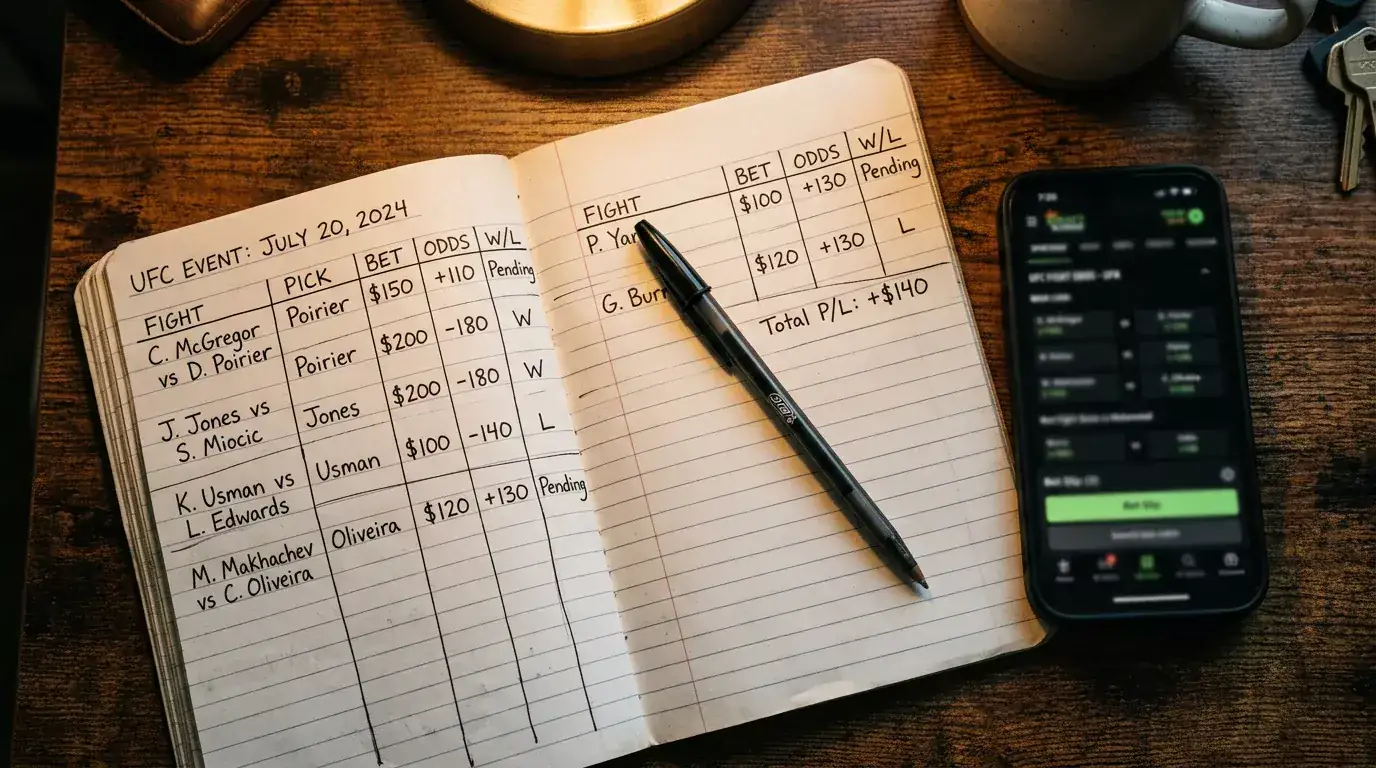
Set your stakes for every fight on the card before the event starts and commit to not adjusting them during the night. Write down your selections and amounts in advance. If you lose your first few bets, the pre-set plan removes the decision point where tilt would otherwise take over. If you find yourself unable to stick to pre-set stakes, consider stepping away from live betting and placing pre-fight wagers only.
Written by the editors at how to bet on the ufc Fight.